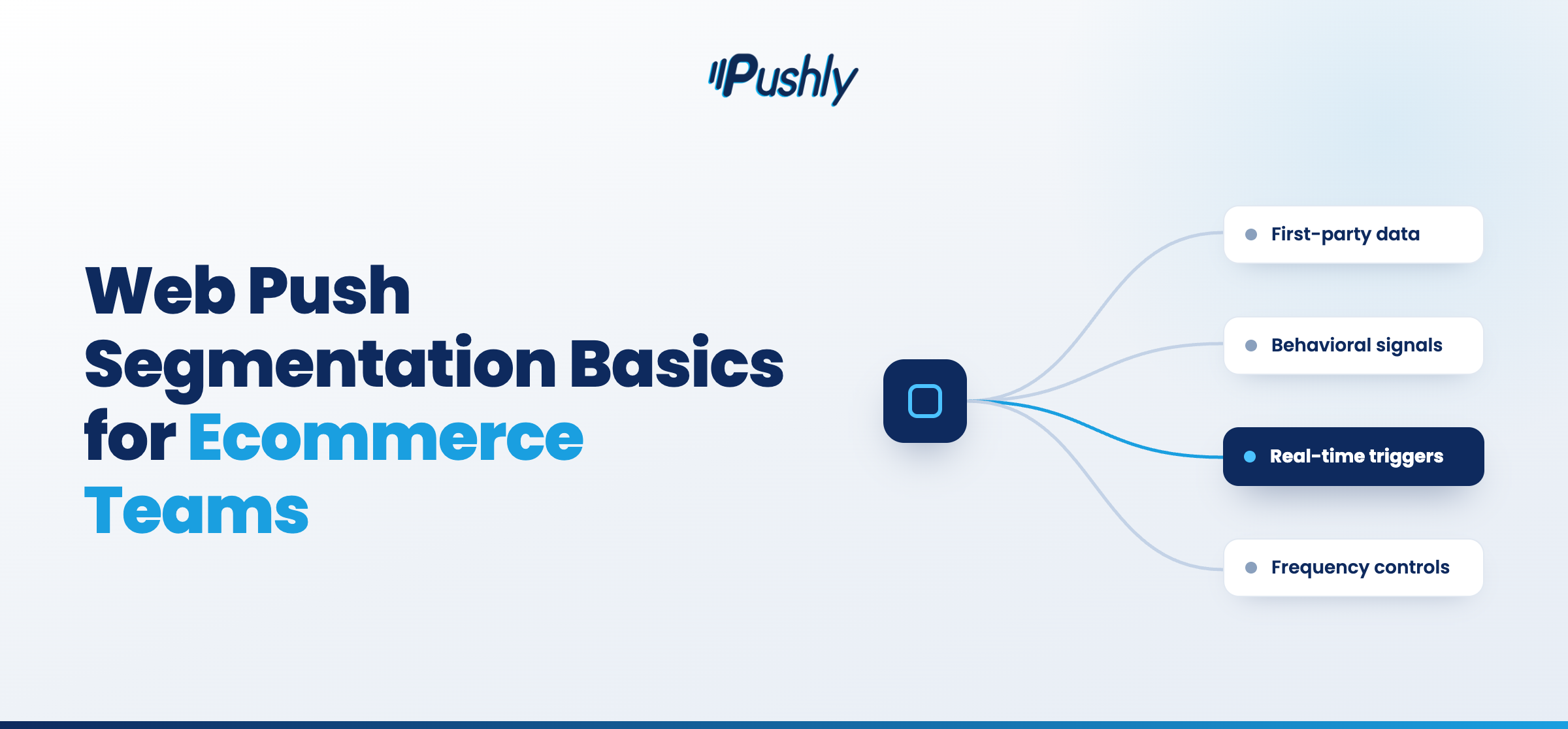
Sending the same notification to every subscriber no longer works. Shoppers expect relevance, and ecommerce teams that deliver it see higher engagement, lower opt-out rates, and stronger revenue. Web push segmentation makes that relevance possible by dividing your subscriber base into groups based on behavior, preferences, and first-party data.
This article walks through eight fundamentals that every ecommerce team should understand before building segmented push campaigns. You will learn how to target the right shoppers with the right message at the right moment.
Key Takeaways: Web Push Notification Segmentation for Ecommerce
- Behavioral segmentation using first-party data outperforms demographic targeting for ecommerce push campaigns
- Real-time triggers based on cart activity, browsing history, and purchase signals drive higher conversion rates
- Permission-first opt-in captures engaged subscribers who want to hear from your brand
- Pushly’s AI-powered segmentation tools help ecommerce teams build precise audience groups from shopper behavior
- Frequency controls protect high-value subscribers from notification fatigue while maximizing engagement
What Ecommerce Teams Need to Know About Web Push Segmentation
Here are the 8 web push notification segmentation basics for ecommerce teams:
1. First-Party Data Is the Foundation
Third-party cookies are disappearing, and ecommerce teams need a new targeting foundation. First-party data collected from your own website fills that gap. Every product view, cart addition, and purchase generates signals you can use for segmentation.
This data belongs to you. It does not rely on external platforms or algorithms that change without warning. Building segments from owned shopper behavior creates targeting that improves over time as your subscriber base grows.
2. Behavioral Signals Beat Demographics
Knowing that a subscriber is 35 years old tells you far less than knowing they viewed hiking boots three times this week. Behavioral segmentation groups subscribers by what they do, not who they are. This approach captures purchase intent directly.
Ecommerce teams can segment by browsing history, cart activity, purchase frequency, category preferences, and engagement with previous notifications. These signals reveal what each subscriber cares about right now.
3. Real-Time Triggers Capture Intent at Its Peak
Purchase intent decays quickly. A shopper who abandons a cart is most likely to convert in the first hour. Segmentation tied to real-time triggers reaches subscribers when their interest is highest.
Cart abandonment, browse abandonment, and wishlist saves all create moments where a timely notification can close the sale. Real-time behavioral triggers turn these moments into revenue opportunities that static campaigns miss entirely.
4. Permission-First Opt-In Builds Quality Audiences
Not all subscribers are equal. A shopper who opts in after reading product reviews signals a different intent than one who accepts a pop-up on landing. Permission-first segmentation starts with how and where subscribers joined your list.
Tracking opt-in context lets you tailor welcome sequences and set expectations appropriately. Subscribers who actively choose to hear from you engage at higher rates and unsubscribe less often than those who opted in passively.
5. Purchase History Reveals Lifecycle Stage
A first-time buyer needs different messaging than a repeat customer. Purchase history segmentation groups subscribers by recency, frequency, and monetary value. This RFM approach identifies your most valuable customers and those at risk of churning.
Ecommerce teams can create segments for new buyers needing onboarding, active customers ready for cross-sells, and lapsed subscribers requiring win-back campaigns. Each group receives notifications calibrated to their relationship with your brand.
6. Product Affinity Enables Personalized Recommendations
Subscribers who browse a specific category signal interest in related products. Product affinity segmentation groups shoppers by the categories, brands, or attributes they engage with most. This enables personalized notifications that feel relevant rather than random.
When a subscriber views athletic shoes repeatedly, sending them a price-drop alert on the exact style they browsed converts at rates that generic promotions cannot match. Pushly connects to your product catalog to automate this level of personalization.
7. Engagement Scoring Identifies Your Advocates
Some subscribers tap every notification. Others ignore most of what you send. Engagement scoring tracks click rates, open rates, and conversion history to rank subscribers by activity level. This scoring separates highly engaged audiences from those going dormant.
High-engagement segments can receive more frequent notifications or early access to promotions. Low-engagement segments may need reactivation campaigns or reduced frequency to prevent unsubscribes. Treating these groups identically wastes opportunities and risks opt-outs.
8. Frequency Controls Protect Subscriber Health
More notifications do not always mean more revenue. Aggressive sending erodes subscriber trust and increases opt-out rates. Frequency-based segmentation ensures high-value customers receive thoughtful outreach rather than constant interruption.
Setting caps by segment preserves long-term audience health. Pushly’s intelligent frequency controls fire triggers only when purchase intent is meaningful, balancing revenue recovery with retention goals.
How to Build Effective Web Push Segments for Your Store
Ecommerce teams that master these eight basics gain a direct channel to shoppers that bypasses crowded inboxes and algorithm changes. First-party data, behavioral signals, and real-time triggers combine to create notifications that feel helpful rather than intrusive.
Pushly gives ecommerce teams the tools to build precise segments from real shopper behavior. The platform’s AI-powered segmentation turns your first-party data into actionable audiences, and its commerce-focused automation handles cart recovery, browse abandonment, and price-drop alerts out of the box. Book a demo to see how segmentation can turn your push channel into a revenue driver.
FAQs About Web Push Notification Segmentation for Ecommerce
What is web push notification segmentation?
Web push notification segmentation divides your subscriber list into groups based on shared characteristics or behaviors. Instead of sending one message to everyone, you target specific audiences with relevant content. Pushly enables segmentation by browsing activity, purchase history, cart behavior, and engagement patterns.
Why is first-party data important for push segmentation?
First-party data comes from your own website and belongs entirely to you. It captures real shopper behavior without relying on third-party cookies or external platforms. Pushly uses this data to build segments based on actions that signal genuine purchase intent.
How does behavioral segmentation differ from demographic targeting?
Behavioral segmentation groups subscribers by what they do, such as products viewed or carts abandoned. Demographic targeting uses static attributes like age or location. Behavioral signals reveal current intent, which makes them more actionable for ecommerce campaigns.
What types of segments work for ecommerce push notifications?
Effective ecommerce segments include cart abandoners, category browsers, recent purchasers, high-value customers, and lapsed subscribers. Pushly allows teams to combine multiple conditions, targeting subscribers who browsed a category and abandoned a cart within 24 hours.
How do frequency controls improve push notification performance?
Frequency controls limit how often individual subscribers receive notifications. This prevents fatigue and reduces opt-outs among your most engaged audiences. Pushly’s intelligent controls balance revenue opportunities with long-term audience preservation.
Can web push segmentation recover anonymous shoppers?
Yes. Web push captures subscribers who opt in without providing an email address or creating an account. Pushly turns anonymous visitors into reachable audiences, then segments them by on-site behavior to deliver relevant notifications that drive return visits and conversions.