
Pushly vs Airship
Airship is a mobile-first engagement platform built around the app SDK, strongest for in-app messaging and app lifecycle campaigns, with an engineering-heavy implementation that averages about three months. Pushly is an enterprise push platform that treats the web as a first-class channel alongside apps and in-app messaging, because for most publishers and retailers the majority of reachable users visit the site but never install the app.
Choose Airship for app-centric messaging at scale; choose Pushly to monetize your whole audience, web included, this quarter.
A Clear Comparison for Teams Evaluating Airship Alternatives
For most publishers and retailers, the app-installed base is a fraction of the reachable audience. The larger group visits the site, sometimes daily, and never installs anything. Airship is built around the app SDK, so that web majority sits outside its center of gravity.
Pushly treats the browser as a first-class channel: one click opts a web visitor in, with no install, and the same profile follows them into the app if they ever download it.
Pushly customers go live in under a month and reach ROI in roughly two, versus a 19-month average ROI timeline for Airship, and G2 reviewers rate Pushly’s ease of admin at 94% against Airship’s 74% (G2 Fall 2026 Compare Report, review data as of August 2, 2026).
Pushly
Pushly gives enterprise marketing teams the power of a full push platform with none of the implementation drag.
- Deploy web and app push notifications from one platform
- Launch campaigns within days instead of months
- Advanced segmentation, behavioral triggers, & retargeting built in
- Begin driving customer engagement immediately
Pushly delivers enterprise capability that minimizes set up friction and offers the fastest time to value in the category.
Airship
Airship’s platform typically demands significant technical resources before the first campaign ever sends.
- Longer setup timelines, often three months or more
- Ongoing engineering involvement required
- More complex configuration requirements
- Slower time to initial campaign launch
Airship’s breadth comes at the cost of longer timelines, heavier engineering dependency, and a materially slower path to results.
Pushly vs Airship: Comparison at a Glance
| Pushly | Airship | |
|---|---|---|
| Platform center of gravity | Web and app push, web-first depth | Mobile app SDK, app-first |
| Reaches non-app users (web) | Yes, core use case | Limited; app install is the anchor |
| In-app messaging | Yes | Yes |
| Implementation | Under 1 month, no engineering dependency | About 3 months, engineering-led |
| Average time to ROI | 2 months | 19 months |
| Ease of admin (G2) | 94% | 74% |
| Who operates it | Marketing team | Engineering plus marketing |
| Free plan | No free tier. Onboarding and a dedicated strategy team are included on every plan | Not published. Essentials is self-service sign-up |
| Pricing model | Custom, priced on audience size and channels. Every plan includes the platform, managed onboarding, a dedicated strategy team and ongoing campaign support, with no separate services fee | Not published. Airship offers its Experience Platform by custom quote, alongside a self-service Essentials tier |
All figures from the G2 Pushly vs Airship Compare Report, Fall 2026. Review data as of August 2, 2026.
Pushly Delivers a Significantly Faster and Easier Setup Experience
Pushly’s higher ratings for ease of setup (92% vs 70%) and ease of admin (94% vs 74%) reflect a streamlined onboarding process and minimal technical requirements. While Airship deployments involve heavier engineering coordination and longer configuration cycles, Pushly enables teams to deploy quickly, launch campaigns sooner, and eliminate operational friction from day one.
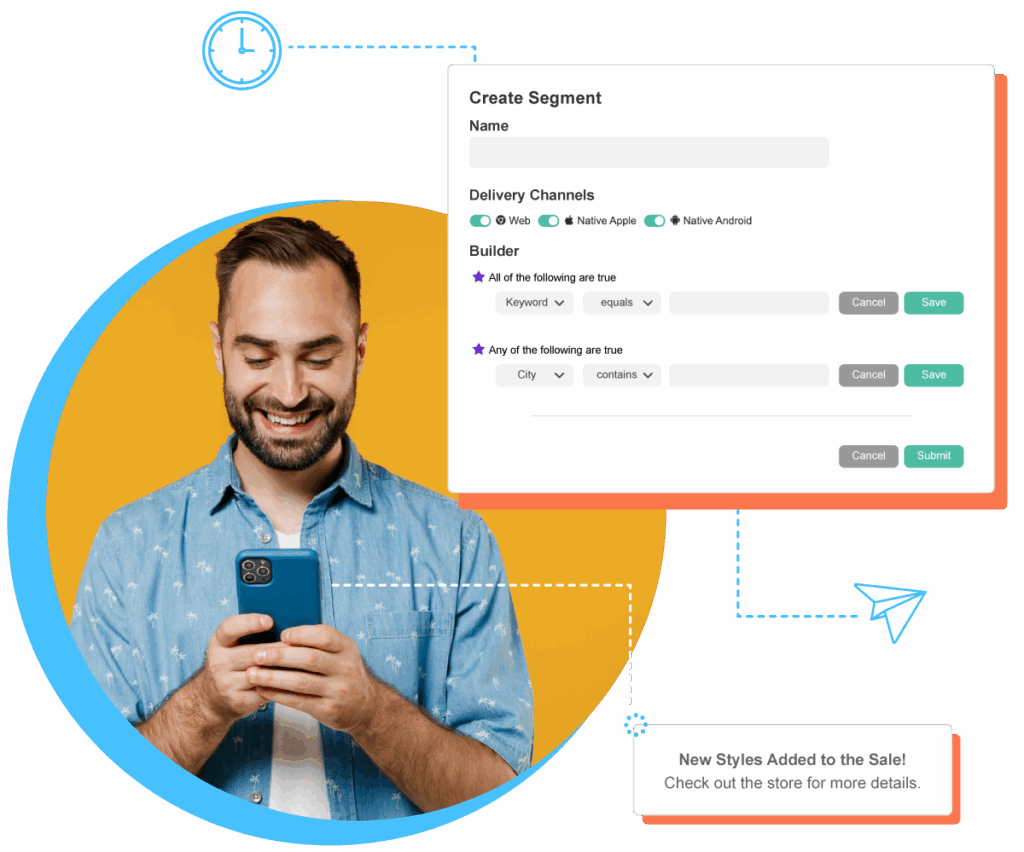
Pushly Enables Faster Deployment and Faster Results
Pushly gets enterprise organizations live and engaging customers in a fraction of the time.
Pushly Delivers Faster Return on Investment
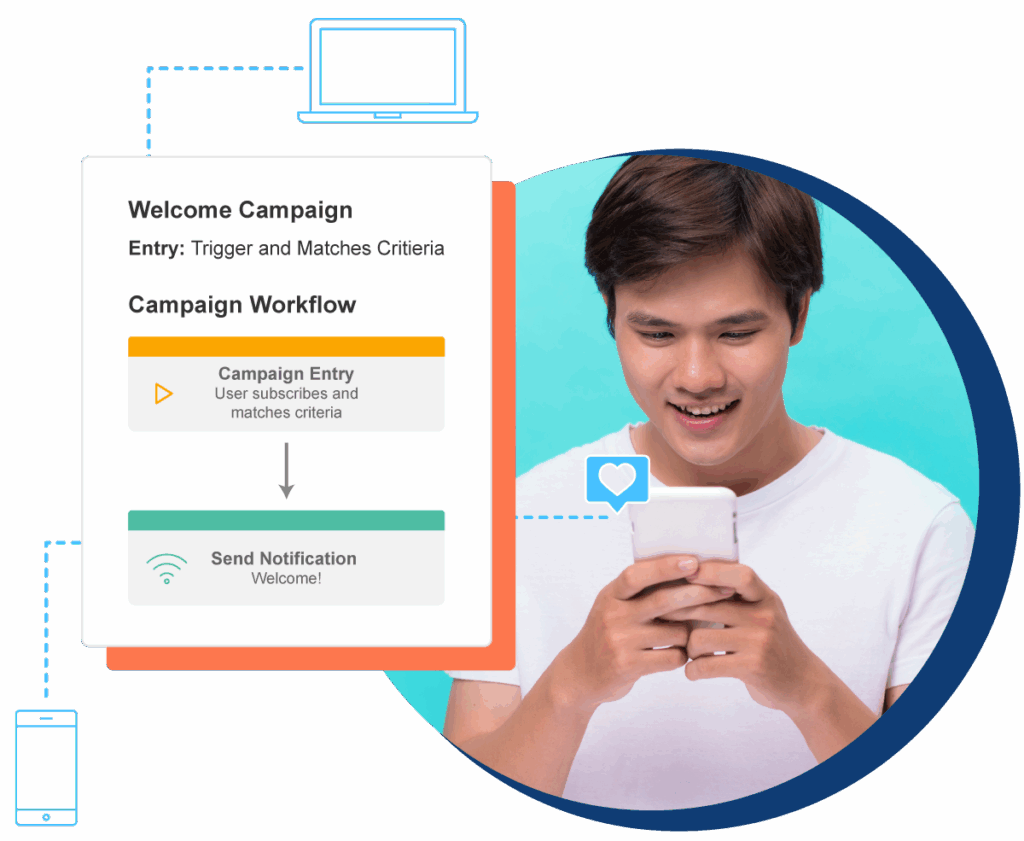
Engagement Capabilities Built for Speed
Pushly provides the engagement toolkit enterprise publishers, brands, and ecommerce teams rely on:
Launch browser notifications and reach massive web audiences instantly.
Engage users across mobile platforms with fast, lightweight integration.
Trigger campaigns automatically from real-time customer behavior.
Reconnect with users efficiently to drive repeat engagement and conversions.
Why Enterprise Publishers, Ecommerce, and Retail Teams Choose Pushly Over Airship
- Enterprise-scale push without enterprise-length implementations
- Campaigns live within days instead of months
- A platform that operates without a heavy engineering setup
- Behavioral targeting, segmentation, and retargeting that drive measurable revenue
- ROI in months, not years
What Our Customers Say
"Pushly has allowed us to continue to engage with users and return them back to our websites. We've recently launched a re-engagement campaign which has increased the views per session of returning customers by +400%."
"The platform is very intuitive, which was essential for me as I was relatively new to managing push notifications for our team. The user-friendly interface made it easy for us to quickly take over and develop an effective strategy."
"The platform is easy to use, and any time there is an issue, or I have a question, James and team are ready to dive in and find a solution or reply with an answer. I have been using this site for a handful of years."
Get in Touch
- 816.542.0455
- info@pushly.com
Want to see how push would work for you? Fill out the form and we’ll get back to you as soon as possible.
Why Publishers, Ecommerce, and Retail Teams Choose Pushly Over Airship
Pushly vs Airship FAQs
How much does Pushly cost compared to Airship?
Airship is priced as a mobile-first enterprise engagement suite. Pushly is custom-priced on audience size and channels, with managed onboarding and a dedicated strategy team included rather than quoted separately. Teams whose push programme is web-led, or web and app together, typically find Pushly the lower total cost because they are not funding mobile-first infrastructure they do not use.
What does Pushly include in the price that Airship charges separately for?
Every Pushly plan includes managed onboarding, a dedicated strategy team and ongoing campaign support, with no separate services fee. Enterprise mobile suites commonly scope implementation and ongoing customer success as separate engagements, so the licence figure is rarely the whole cost.
How difficult is it to migrate from Airship to Pushly?
Pushly's onboarding team handles subscriber migration, segment mapping and campaign rebuilds, with a median time to first production send of under 30 days across enterprise accounts. The heaviest part of an Airship migration is usually rebuilding automation logic, and Pushly's team does that with you rather than handing you an empty platform and documentation.
Do I lose my existing subscribers when I switch from Airship?
No. Web push subscribers transfer without a fresh opt-in provided you stay on the same domain. App push subscribers move when the SDK is swapped in your next release, so the timing usually follows your normal release cycle rather than requiring a special deployment.
What do I give up by leaving Airship?
Depth on the mobile-app side. Airship is built mobile-first, and if your programme leans on in-app messaging, message centre and SDK-level personalisation doing real work, that depth matters. Pushly covers web and app push as the whole product. If your revenue comes from web audiences returning to your site, the trade favours Pushly.
How long does Pushly take to implement compared to Airship?
Pushly's median time to first production send is under 30 days across enterprise onboardings, and the install itself is a tag on your site or an SDK in your app. Implementation timelines for enterprise mobile suites vary widely with the scope of the app-side integration.
Does switching from Airship require engineering resource?
Far less than most teams expect. Web push needs a tag; app push needs an SDK in your next build. Segmentation, behavioural triggers and retargeting are configured by marketers rather than built by developers, which is the specific reason teams without dedicated mobile engineering move to Pushly.
Who should stay on Airship?
Mobile-app-first enterprises with dedicated mobile engineering, running a programme that leans on in-app messaging, message centre and SDK-level personalisation as much as on push. If the app is the product and you have the team to run a mobile suite, Airship is built for exactly that. Pushly is the better fit when web is where your audience returns.