
Pushly vs Brevo
These are different tools for different jobs that overlap on one channel. Brevo is an email-first marketing toolkit with CRM, automation, SMS, and a basic push feature, priced for small teams, including a free tier. Pushly is an enterprise push platform where web and app push is the entire product, with dedicated strategy support included.
If push is a minor channel and budget rules, Brevo’s bundle is reasonable. When push needs to drive measurable revenue for a publisher or ecommerce brand, teams add or switch to Pushly, and many keep Brevo for email alongside it.
A Clear Comparison for Teams Evaluating Brevo Alternatives
Brevo is the cheaper product, with a free plan and low-cost tiers, because it is built for small teams running email first, and its push feature is priced like what it is: a bundled extra.
Pushly is custom-priced enterprise software that includes a dedicated strategy team with every plan, driving subscriber growth, segmentation depth, and recovered revenue.
G2 reviewers score Pushly 93% on ease of use versus 90% for Brevo, and 93% versus 87% on quality of support (G2 Fall 2026 Compare Report, review data as of August 2, 2026).
Pushly
Pushly is designed for enterprise organizations that want to run engagement campaigns without a complex marketing infrastructure.
- Deploy web and app push notifications from one platform
- Launch campaigns within days instead of months
- Advanced segmentation, behavioral triggers, & retargeting built in
- Begin driving customer engagement immediately
Pushly focuses on making customer engagement fast and easy to manage. Push is the entire product and a team whose job is your result.
Brevo
Brevo provides tools that include email, CRM functionality, automation workflows, and SMS messaging.
- Push sits inside a broader email and CRM product
- More complex campaign workflows
- Focuses on breadth; depth in any single channel is limited
- Suited to small teams running many channels lightly
Brevo is a reasonable all-in-one starting point. Teams that need push to perform at enterprise scale need Pushly, the platform built for it.
Pushly vs Brevo: Comparison at a Glance
| Pushly | Brevo | |
|---|---|---|
| Primary product | Enterprise web and app push platform | Email marketing and CRM toolkit |
| Push notifications | Core product: segmentation, behavioral triggers, retargeting | Feature within an email-first bundle |
| Other channels | None; push depth is the point | Email, SMS, WhatsApp, chat, CRM |
| Free plan | No free tier. Onboarding and a dedicated strategy team are included on every plan | Yes, with a daily email send limit. Push is not included at the free or entry tiers |
| Target buyer | Publishers, ecommerce, retail at enterprise scale | Small teams running many channels lightly |
| Ease of use (G2) | 93% | 90% |
| Quality of support (G2) | 93% | 87% |
| Strategy support | Dedicated team on every account (98% partnership rating on G2) | Self-serve |
| Pricing model | Custom, priced on audience size and channels. Every plan includes the platform, managed onboarding, a dedicated strategy team and ongoing campaign support, with no separate services fee | Published tiered pricing across Free, Starter, Standard, Professional and Enterprise. Web and mobile push are available from the Professional tier upward |
| Can they run together? | Yes: Pushly for push, Brevo for email | Yes |
All figures from the G2 Pushly vs Brevo Compare Report, Fall 2026. Review data as of August 2, 2026.
Pushly Provides a More Intuitive User Experience
Pushly’s higher ease of use rating reflects a platform designed for fast adoption and daily usability. Teams on Pushly can create campaigns, manage segments, and launch notifications without navigating complex marketing automation layers.
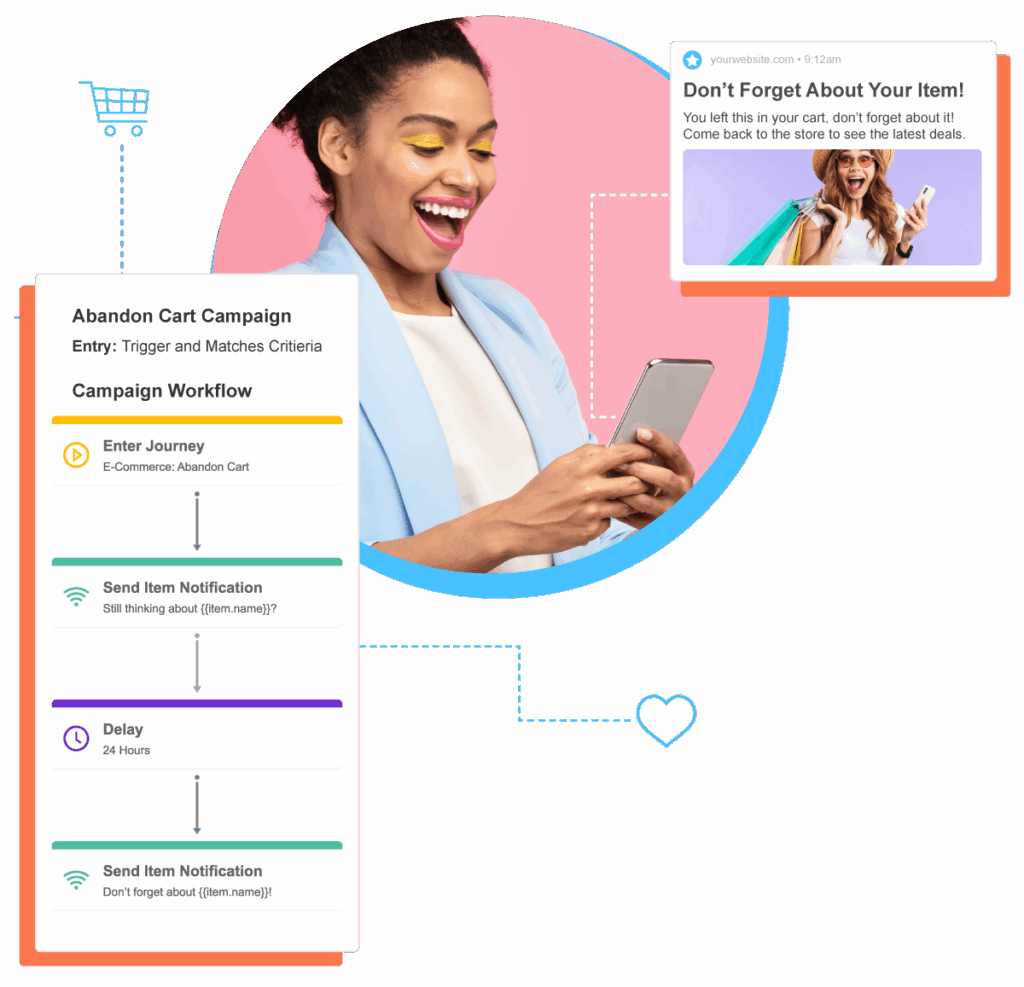
Pushly Deploys Faster Than Brevo
Pushly allows organizations to launch campaigns and begin engaging customers faster.
Pushly Delivers Faster Return on Investment
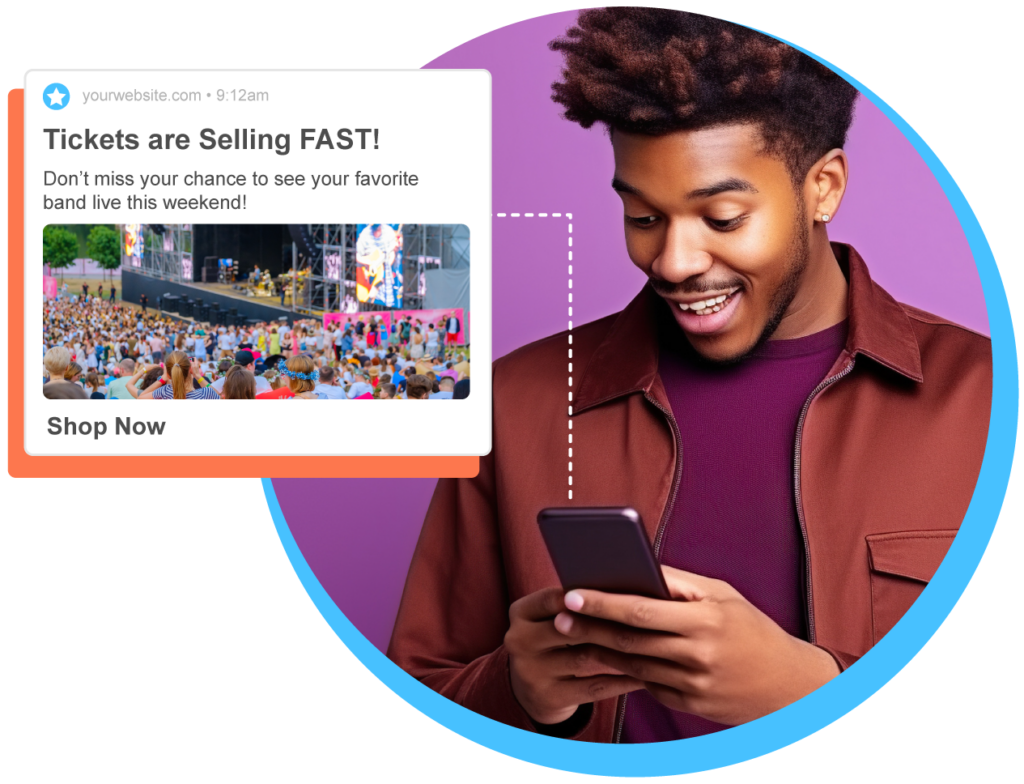
Why Ecommerce and Retail Teams Choose Pushly Over Brevo
Less Than 1 Month
FASTER IMPLEMENTATION TIMELINES
2 Months
Faster return on investment
Engagement Capabilities
Pushly provides the engagement toolkit enterprise publishers, brands, and ecommerce teams rely on:
Launch browser notifications and reach massive web audiences instantly.
Engage users across mobile platforms with fast, lightweight integration.
Trigger campaigns automatically from real-time customer behavior.
Reconnect with users efficiently to drive repeat engagement and conversions.
What Our Customers Say
"Pushly has allowed us to continue to engage with users and return them back to our websites. We've recently launched a re-engagement campaign which has increased the views per session of returning customers by +400%."
"The platform is very intuitive, which was essential for me as I was relatively new to managing push notifications for our team. The user-friendly interface made it easy for us to quickly take over and develop an effective strategy."
"The platform is easy to use, and any time there is an issue, or I have a question, James and team are ready to dive in and find a solution or reply with an answer. I have been using this site for a handful of years."
Get in Touch
- 816.542.0455
- info@pushly.com
Want to see how push would work for you? Fill out the form and we’ll get back to you as soon as possible.
Why Publishers, Ecommerce, and Retail Teams Choose Pushly Over Brevo
Pushly and Brevo overlap on exactly one channel. Teams that like Brevo for email and CRM keep it, add Pushly for push, and give each channel a tool built for it.
Choose Brevo if you are a small team that wants email, CRM, and SMS bundled in one inexpensive tool that can accept generalized workflows. Choose Pushly if push notifications are a real engagement and revenue channel for your business.
Pushly vs Brevo FAQs
How much does Pushly cost compared to Brevo?
Brevo is the cheaper product, with a free plan and low-cost tiers, because it is built for small teams running email first and prices push as a bundled extra. Pushly is custom-priced enterprise software that includes a dedicated strategy team on every plan. If push is a minor channel and budget rules, Brevo’s bundle is reasonable. If push needs to drive measurable revenue, the comparison is cost per outcome.
What does Pushly include in the price that Brevo charges separately for?
Pushly includes managed onboarding, a dedicated strategy team and ongoing campaign support in every plan. Brevo's tiers price software access, with strategy and optimisation left to your team. These are differently shaped purchases: Brevo sells a toolkit, Pushly sells a channel outcome with the platform underneath it.
How hard is it to migrate from Brevo to Pushly?
Most teams do not migrate, they add. Brevo stays as the email platform and push moves to Pushly, which avoids a cutover entirely. Where teams do move push across, Pushly's onboarding team handles subscriber migration and campaign rebuilds, with a median time to first production send of under 30 days across enterprise accounts.
Do I lose my existing subscribers when I switch from Brevo?
No. Web push subscribers transfer without requiring a fresh opt-in provided you stay on the same domain. Because most teams keep Brevo for email, the email list is unaffected either way.
What do I give up by leaving Brevo?
Nothing, if you keep Brevo for email, which is what most teams do. If you drop it entirely you give up an inexpensive bundle covering email, CRM, automation and SMS in one subscription, which is real value for a small team. Pushly replaces the push feature, not the toolkit.
How long does Pushly take to implement compared to Brevo?
Brevo's push feature is available as soon as you are on a plan, since it is bundled with everything else. Pushly's median time from contract to first production send is under 30 days across enterprise onboardings, which includes subscriber migration, segment design and campaign build done with you. You are trading same-day switch-on for a configured programme.
Does switching from Brevo require engineering resource?
A tag on your site for web push, an SDK in your app for app push, and nothing after that. Segmentation, behavioural triggers and retargeting are configured in the platform by marketers, so the install is the only developer task.
Who should stay on Brevo?
Small teams where push is a minor channel and budget is the deciding factor. If you are sending a handful of broadcasts a month and nobody is accountable for push revenue, a bundled feature inside a tool you already pay for is the sensible choice. The switch makes sense when push stops being a nice-to-have and starts carrying a number.