Pushly vs MoEngage
MoEngage is a mobile-app-centric lifecycle suite: push, in-app messaging, email, and flows built around app users, with configuration overhead and an average go-live time of two months per G2 review data.
Pushly is an enterprise push platform that treats the web browser as a first-class channel alongside the app, which is decisive for publishers and retailers whose largest reachable audience might not install an app. Choose MoEngage for app-first lifecycle marketing with in-app modules; choose Pushly when web audiences and speed to revenue are the priority.
A Clear Comparison for Teams Evaluating MoEngage Alternatives
MoEngage sells tiered plans that scale with monthly active users and modules. Pushly is custom-priced by audience size, with onboarding and a dedicated strategy team included in every plan.
Factor in time: MoEngage deployments average two months per G2 review data, while Pushly customers are live and sending within the first month, so the payback clock starts a month sooner on the same budget. G2 rates Pushly’s ease of admin at 94% versus 88% for MoEngage (G2 Fall 2026 Compare Report, review data as of August 2, 2026).
Pushly
Pushly is designed for organizations that need to deploy engagement campaigns quickly and operate efficiently without complex onboarding.
- Deploy web and app push notifications from one platform
- Launch campaigns within days instead of months
- Advanced segmentation, behavioral triggers, & retargeting built in
- Begin driving customer engagement immediately
Pushly focuses on making customer engagement fast and easy to manage.
MoEngage
MoEngage is designed for lifecycle engagement environments that often require more configuration and management.
- More complex onboarding and implementation workflows
- Greater operational overhead
- Additional configuration required to launch campaigns
- Longer path to operational readiness
Teams whose engagement lives on the web and in revenue campaigns get there faster with a platform like Pushly that is built for it.
Pushly vs MoEngage: Comparison at a Glance
| Pushly | MoEngage | |
|---|---|---|
| Center of gravity | Web and app push, web-first depth | Mobile app lifecycle suite |
| Web push for anonymous visitors | Yes, core use case (opt-in growth, retargeting) | Secondary to app flows |
| In-app messaging and flows | Yes | Yes |
| Average go-live | Under 1 month | 2 months (per G2 review data) |
| Ease of admin (G2) | 94% | 88% |
| Configuration burden | Managed onboarding, marketer-run | Module setup and ongoing management |
| Strategy support | Dedicated team, 98% partnership rating on G2 | Tiered support |
| Free plan | No free tier. Onboarding and a dedicated strategy team are included on every plan | Not published |
| Pricing model | Custom, priced on audience size and channels. Every plan includes the platform, managed onboarding, a dedicated strategy team and ongoing campaign support, with no separate services fee | Not published. MoEngage lists Growth and Enterprise packages with optional add-ons, and provides costs on request |
All figures from the G2 Pushly vs MoEngage Compare Report, Fall 2026. Review data as of August 2, 2026.
Pushly Provides a Simpler Administrative Experience
Pushly’s higher Ease of Admin rating reflects a platform designed to simplify daily engagement management. Teams can launch campaigns quickly, manage audiences easily, and operate without engineering heavy workflows.
Pushly Deploys Faster Than MoEngage
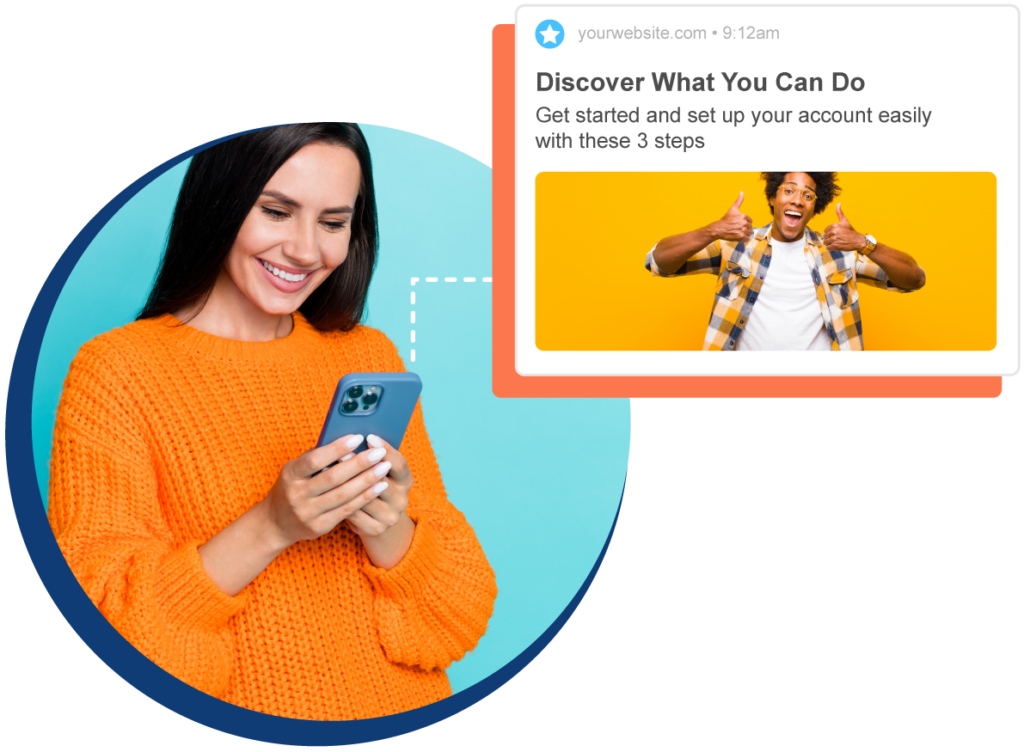
Two months of implementation is two months of return visits, recovered carts, and re-engaged users that never happen. Pushly’s onboarding is handled by a dedicated team and measured in days, so the channel starts earning inside the first month.
Pushly Delivers Faster Return on Investment
Why Ecommerce and Retail Teams Choose Pushly Over MoEngage
Less Than 1 Month
FASTER IMPLEMENTATION TIMELINES
2 Months
Faster return on investment
Engagement Capabilities
Pushly provides the engagement toolkit enterprise publishers, brands, and ecommerce teams rely on:
Launch browser notifications and reach massive web audiences instantly.
Engage users across mobile platforms with fast, lightweight integration.
Trigger campaigns automatically from real-time customer behavior.
Reconnect with users efficiently to drive repeat engagement and conversions.
What Our Customers Say
"Pushly has allowed us to continue to engage with users and return them back to our websites. We've recently launched a re-engagement campaign which has increased the views per session of returning customers by +400%."
"The platform is very intuitive, which was essential for me as I was relatively new to managing push notifications for our team. The user-friendly interface made it easy for us to quickly take over and develop an effective strategy."
"The platform is easy to use, and any time there is an issue, or I have a question, James and team are ready to dive in and find a solution or reply with an answer. I have been using this site for a handful of years."
Get in Touch
- 816.542.0455
- info@pushly.com
Want to see how push would work for you? Fill out the form and we’ll get back to you as soon as possible.
Why Publishers, Ecommerce, and Retail Teams Choose Pushly Over MoEngage
Choose MoEngage if you are running app-first, multi-module lifecycle campaigns with the staff to manage them.
Choose Pushly if you want enterprise-grade web and app push that is live in under a month, run entirely by your marketing team, and backed by a dedicated partnership team rated 98% on G2.
Pushly vs MoEngage FAQs
How much does Pushly cost compared to MoEngage?
MoEngage is priced as a cross-channel engagement suite with a mobile-first heritage. Pushly is custom-priced on audience size and channels, with managed onboarding and a dedicated strategy team included. Teams whose programme is web-led typically find a single-channel platform the lower total cost, because they are not paying for channels they run elsewhere.
What does Pushly include in the price that MoEngage charges separately for?
Every Pushly plan includes managed onboarding, a dedicated strategy team and ongoing campaign support, with no separate services fee. On suite platforms, implementation and ongoing customer success are commonly scoped and priced separately from the licence.
How hard is it to migrate from MoEngage to Pushly?
Pushly's onboarding team handles subscriber migration, segment mapping and campaign rebuilds, with a median time to first production send of under 30 days across enterprise accounts. The configuration burden that made the original MoEngage setup slow does not repeat on the way out, because Pushly's team does the rebuild with you.
Do I lose my existing subscribers when I switch from MoEngage?
No. Web push subscribers transfer without requiring users to opt in again provided you stay on the same domain. App push subscribers move when the SDK is swapped in your next release.
What do I give up by leaving MoEngage?
Breadth across channels, and mobile-app depth. MoEngage spans push, in-app, email and SMS with strong app-side capability, and if your programme is app-centric that matters. Pushly is web and app push as the whole product. If your revenue comes from web audiences returning to your site, the trade favours Pushly.
How long does Pushly take to implement compared to MoEngage?
Pushly's median time from contract to first production send is under 30 days across enterprise onboardings, and the install is a tag on your site or an SDK in your app. Suite implementations vary with how much of the platform you are configuring, which is where most of the difference in time to first send comes from.
Does switching from MoEngage require engineering resource?
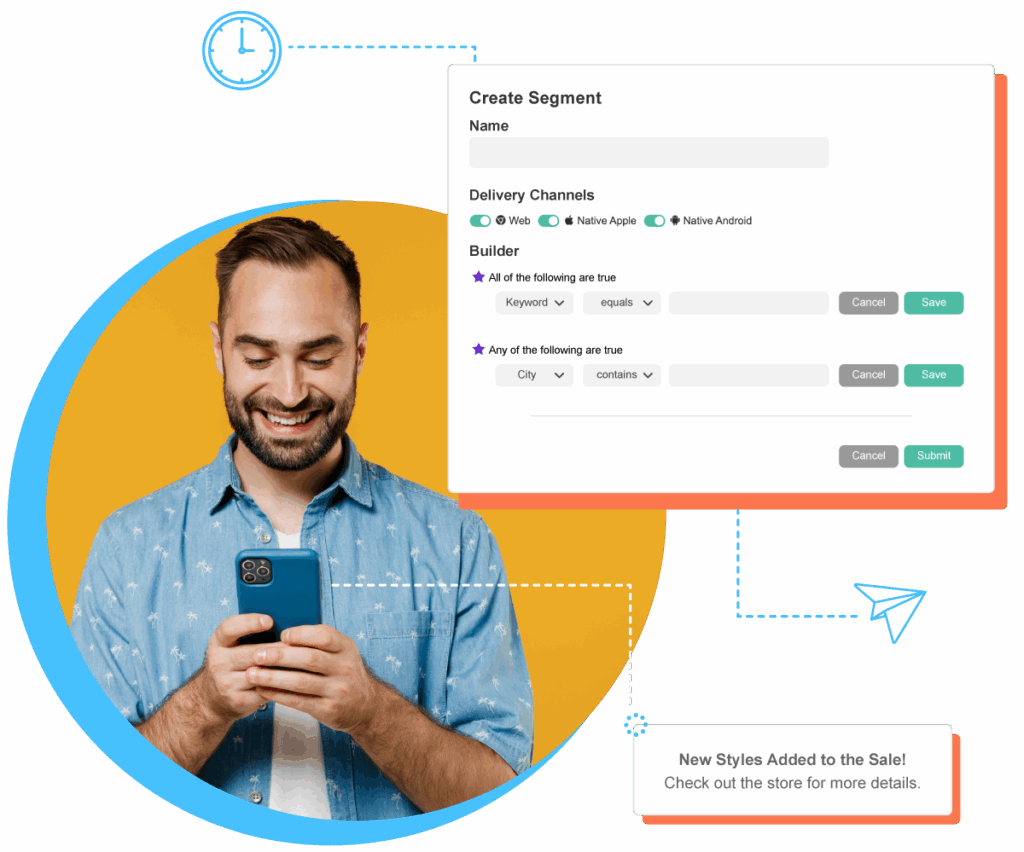
A tag for web push and an SDK for app push, and then no. Segmentation, behavioural triggers and retargeting are configured by marketers in the platform rather than assembled through configuration work, which is the most common reason teams move.
Who should stay on MoEngage?
Mobile-app-first teams running a genuine multi-channel programme with the in-house resource to configure and maintain it. If the app is where your users live and you are actively using in-app, email and SMS alongside push, a suite is the right shape. Pushly is the better fit when web push is the revenue channel and you want it run without a configuration project.