Meta’s 2025 algorithm updates did not just change reach.
They reinforced a structural truth publishers keep relearning: when distribution is controlled by platforms, access to your audience is conditional.
These updates were not a one-off disruption. They were a reminder.
Pushly operates outside that system.
Control vs Dependency in Audience Distribution
For years, publishers have adapted to algorithmic shifts across Facebook and Instagram, adjusting formats, cadence, and content strategy to preserve reach. Each update brings new rules, new tradeoffs, and new uncertainty.
The 2025 changes continued that pattern.
They did not signal a failure of content quality or editorial strategy. They highlighted the limits of distribution models built on dependency. When visibility depends on platform incentives, even engaged audiences become intermittently unreachable.
Pushly was designed for a different distribution model entirely.
What Changed in Meta’s Algorithm in 2025
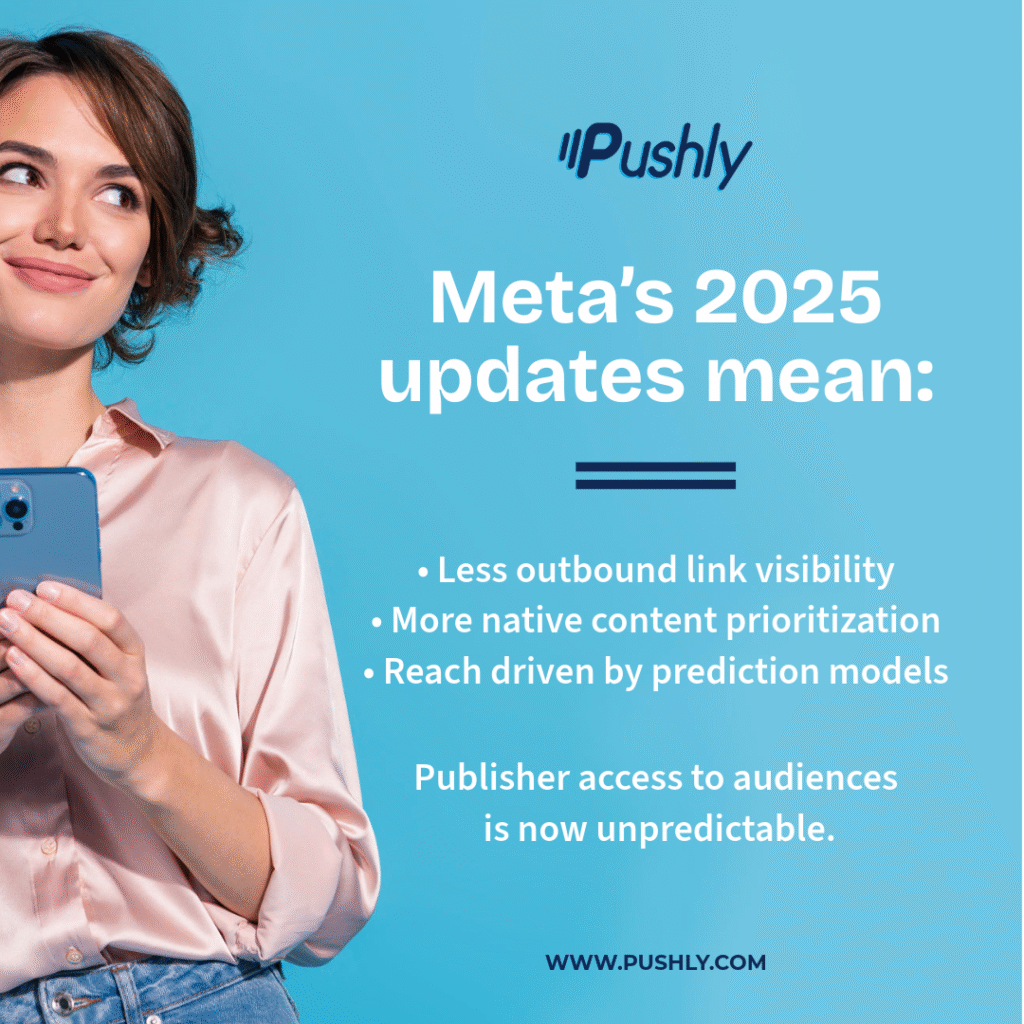
Meta’s 2025 updates placed even greater emphasis on platform-controlled distribution across its social surfaces.
Key changes included:
- Reduced organic visibility for outbound links
- Increased prioritization of native, in-platform content
- Heavier reliance on predicted user behavior rather than publisher intent
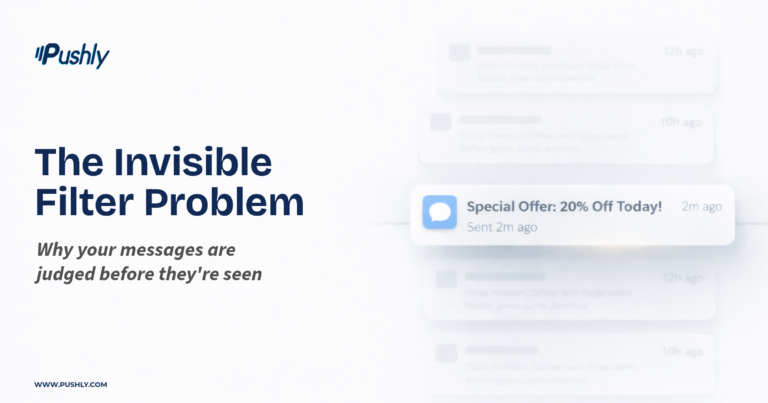
The result was further distance between publishers and their audiences. Even content users actively want to see may be filtered, delayed, or deprioritized based on factors outside a publisher’s control.
This is not accidental. It is the nature of algorithmic distribution at scale.
Why Pushly’s Opt-In Notifications Are Not Affected
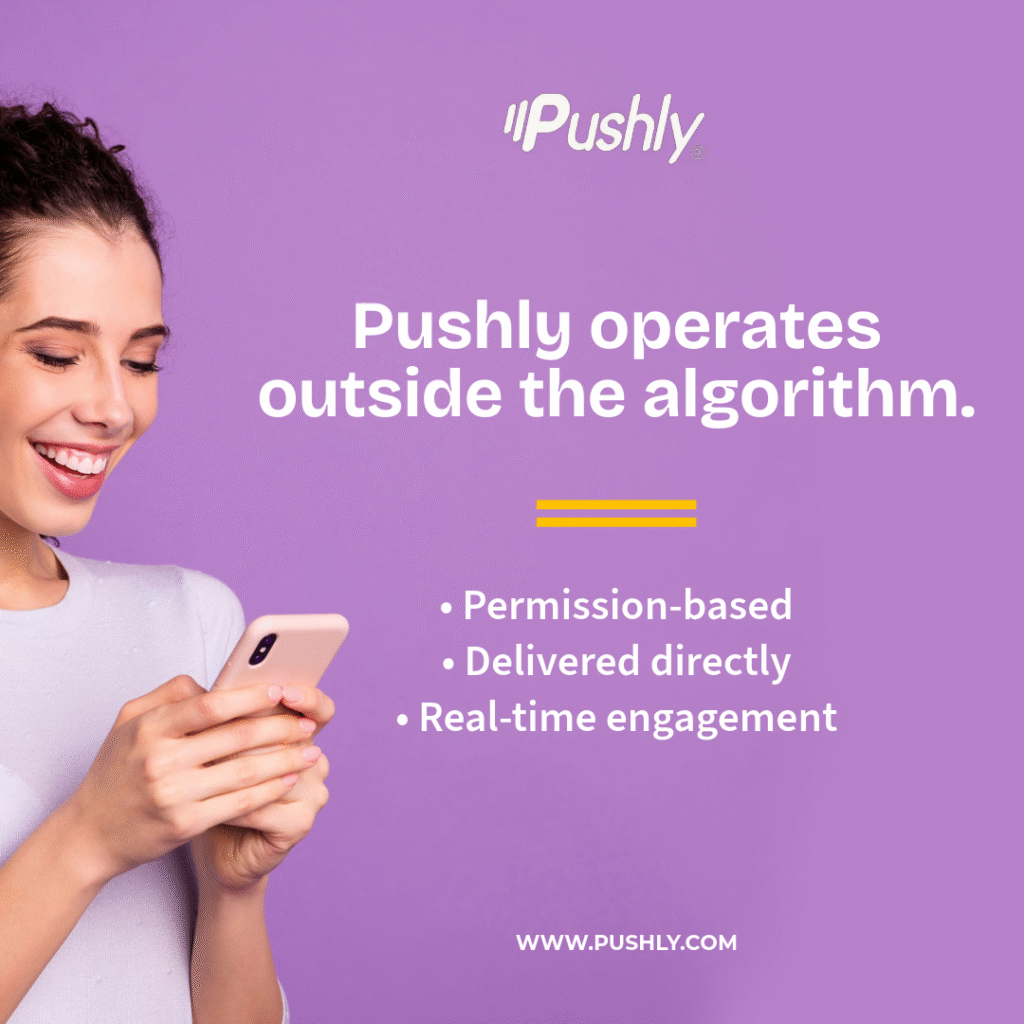
Pushly’s opt-in notifications do not compete for feed placement.
They are not scored by engagement prediction models.
They are not filtered by shifting platform priorities.
They are delivered directly to users who have explicitly chosen to receive them.
That choice is the defining difference.
When a user opts-in through Pushly, they grant permission for direct communication. Once that permission is established, delivery no longer depends on algorithmic ranking, auction pressure, or third-party policy changes.
If a notification is sent, it is delivered.
Meta’s 2025 updates do not alter that relationship.
Permission Changes the Economics of Reach
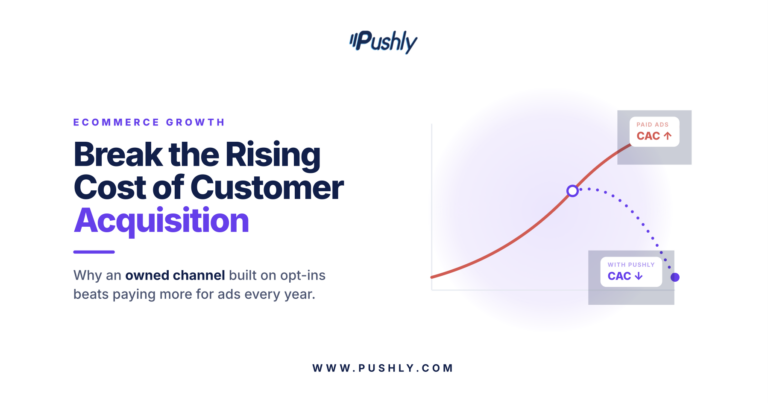
On social platforms, reach is rented. It fluctuates based on auctions, incentives, and policy decisions that publishers do not control.
With Pushly, reach is earned through consent.
This shift changes how publishers think about growth. Instead of chasing visibility within algorithmic systems, the focus moves to building high-quality opt-in experiences that attract users at moments of genuine interest.
Pushly’s opt-in model prioritizes:
- Transparent opt-in prompts
- User-controlled notification preferences
- Contextual relevance tied to real content engagement
The result is an audience that expects communication, values it, and responds consistently over time.
Why Opt-In Quality Matters More Than Algorithmic Reach
Algorithmic platforms optimize for predicted engagement at scale. Pushly optimizes for relevance at the individual level.
Because opt-in notifications are permission-based, performance is driven by trust, timing, and value rather than exposure mechanics. This leads to outcomes that remain stable even as external platforms evolve.
High-quality opt-ins typically produce:
- Higher engagement rates
- More consistent traffic patterns
- Stronger long-term audience retention
These results are not tied to feed visibility or platform favor. They compound through sustained, direct relationships.
Built for Real-Time Moments, Not Feed Timing
Meta determines when content appears in a feed. Pushly delivers messages in real-time.
That distinction matters most for time-sensitive content such as breaking news, live sports, weather alerts, and market updates. Opt-in notifications arrive while the moment is still relevant, not after it has passed through an algorithmic queue.
This real-time delivery operates entirely outside feed-ranking systems, giving publishers control over timing when it matters most.
Algorithm Independence Is a Strategic Advantage
The most resilient publishers in 2025 are not abandoning social platforms. They are reducing dependency on them.
Pushly’s opt-in notifications provide a direct engagement layer that does not fluctuate with algorithm updates, auction dynamics, or feed prioritization rules. When Meta changes the rules, your opt-in audience remains reachable.
That independence is not just technical. It is strategic.
Why Publishers Choose Pushly
Pushly helps publishers turn fleeting traffic into durable audience relationships through permission-first engagement.
By focusing on opt-in quality, real-time delivery, and user trust, Pushly gives publishers a stable channel they fully control. There is no guessing when an audience might see content. Delivery happens when it matters.
Contact Us
Algorithmic platforms will continue to change. That is their business model.
The question for publishers is whether access to their audience should change with them.
Pushly helps publishers grow, manage, and activate opt-in audiences with notifications built for real-time relevance and long-term retention.
👉 Learn how Pushly helps publishers stay connected, regardless of algorithm changes: https://pushly.com/contact/